Signal playback
Run it
git clone https://github.com/remotivelabs/remotivelabs-remotive-car.git
cd remotivelabs-remotive-car

remotive topology build \
  -f instances/android/main.instance.yaml \
  -f instances/android/android_emulator_in_docker.instance.yaml \
  -f settings/can_over_udp.settings.instance.yaml \
  -f settings/vlan_using_bridge.settings.instance.yaml \
  build

docker compose -f build/remotive_car_android/docker-compose.yml --profile playback --profile 3dcar up --build
Open http://localhost:3000 to watch the car follow the recorded drive.
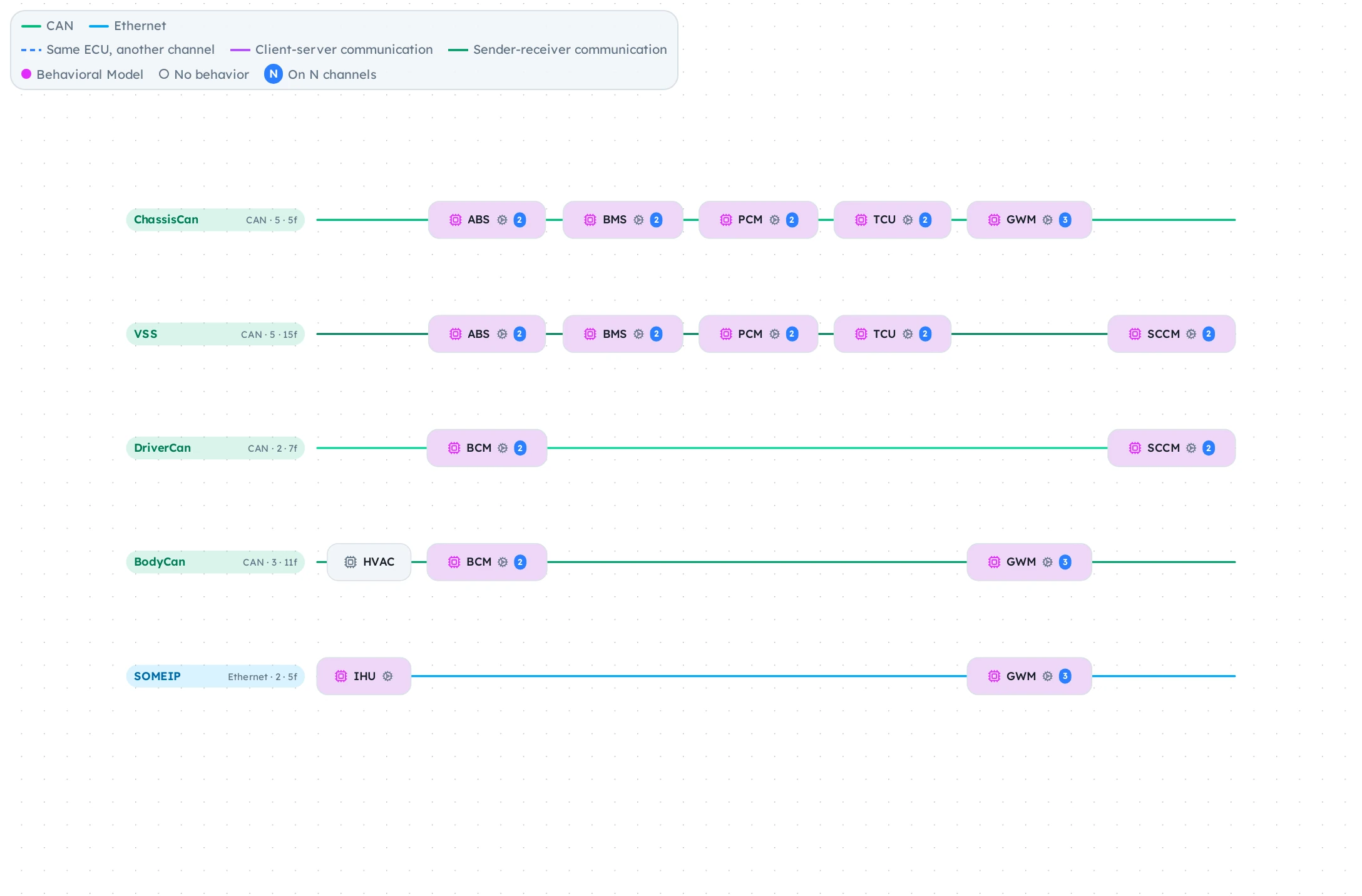
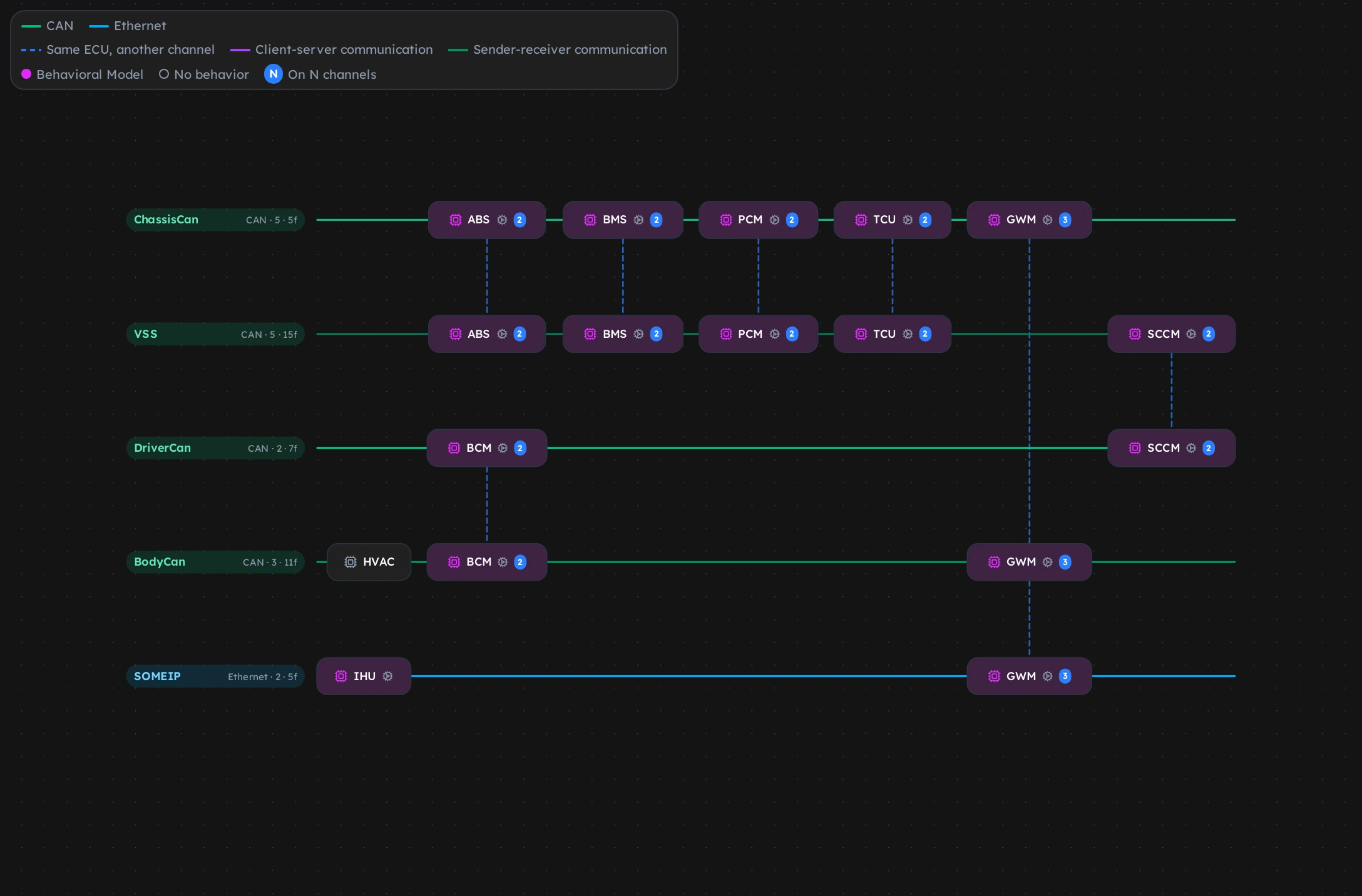
Using playback of recorded data can be useful to test longer scenarios. This example show how recorded VSS signals can be fed into behavioral models that convert them into platform specific signals. In this case the signals include location, steering wheel angle, and pedal positions among others.
- Part of the RemotiveCar example
- Instance file: local_playback.instance.yaml
- Platform adding VSS channel: topology.platform.yaml
- Starting playback: playback.local
- Behavioral models converting VSS to RemotiveCar platform: abs, sccm, tcu
Notice:
- In this example playback happens to be part of the Android instance, but playback is not limited to Android use cases.
- Playback is not limited to VSS. You can also add custom signals or even raw data.
- This example use CSV, but playback also support other formats, for example candump for raw CAN data.
To run playback with signals, see Cuttlefish or Android Emulator.