Scenario tests with behave
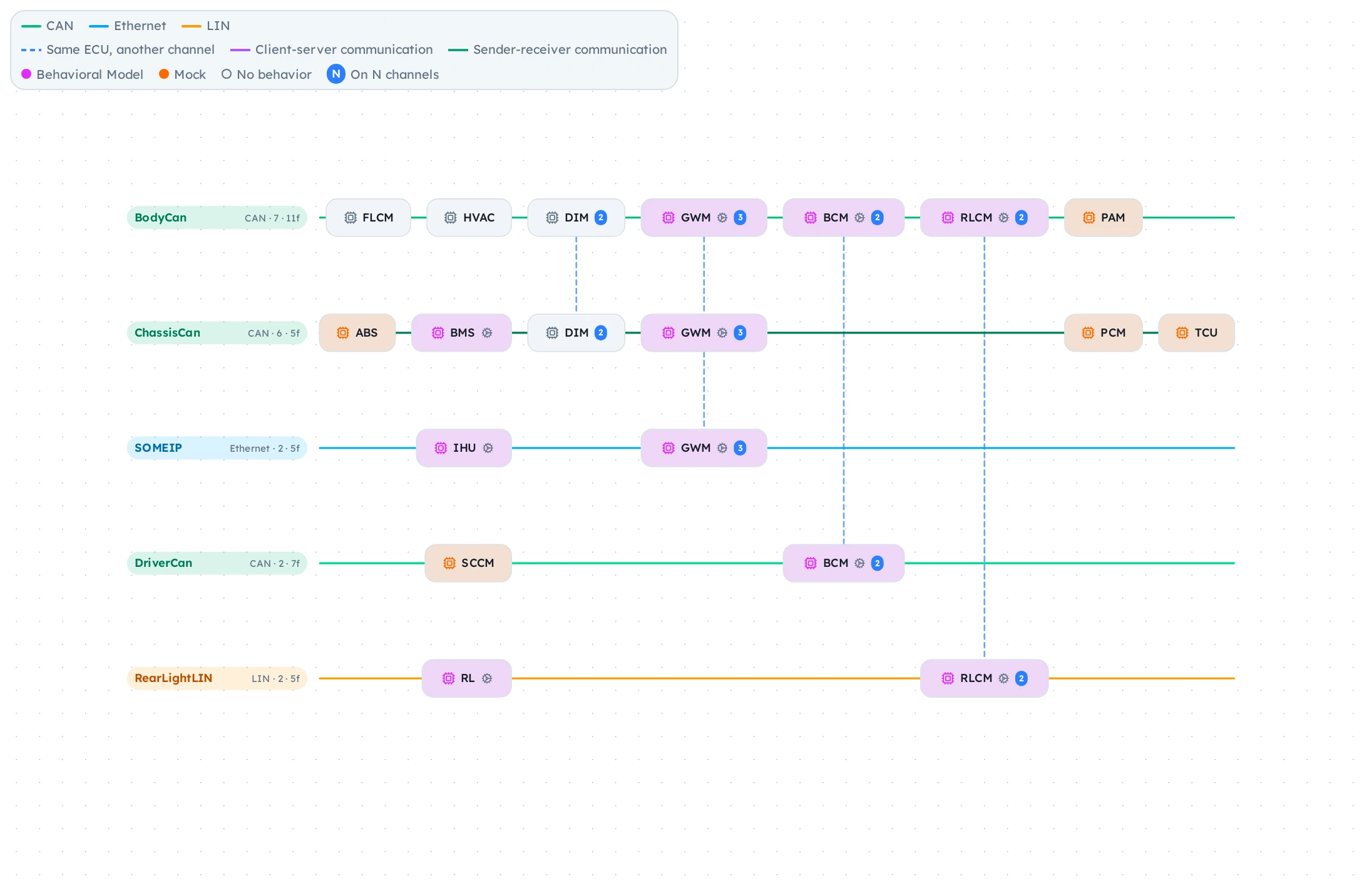
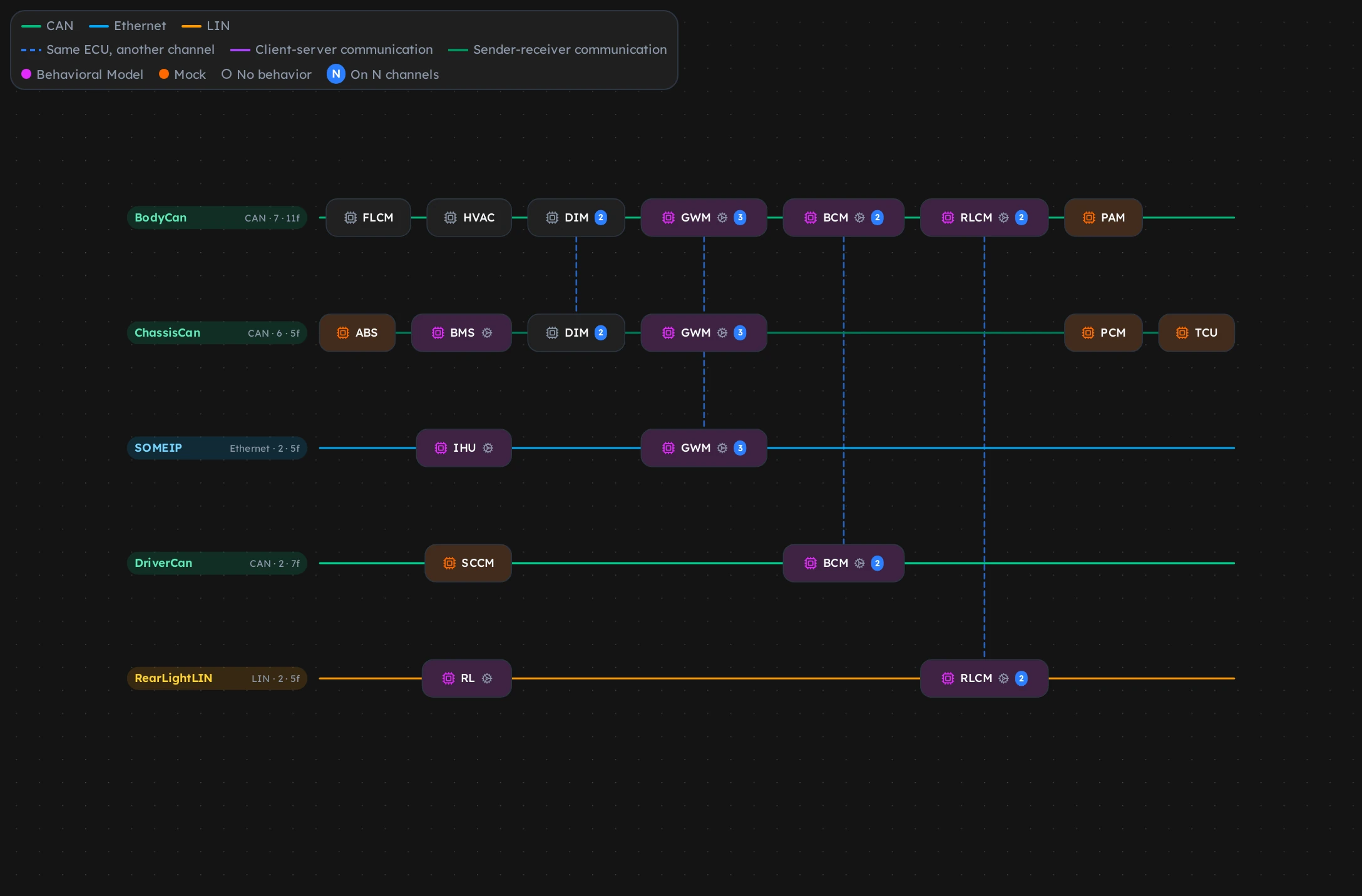
Run it
git clone https://github.com/remotivelabs/remotivelabs-remotive-car.git
cd remotivelabs-remotive-car

remotive topology build \
  -f instances/hello_world/main.instance.yaml \
  -f settings/can_over_udp.settings.instance.yaml \
  build

docker compose -f build/remotive_car_hello_world/docker-compose.yml --profile behave up --build --abort-on-container-exit
Using behave to write test cases allows your domain experts to more easily understand the tests that are being run.
- Part of the RemotiveCar example
- Example features: blink_left.feature and hazard_light.feature
- Example step implementation example_steps.py
- Control how to run tests: behave.instance.yaml
- Python project: pyproject.toml
Start topology and run tests:
remotive topology build ...
docker compose -f ... --profile behave up --abort-on-container-exit
Optionally first start topology and then run tests (useful when writing tests)
# build and start
remotive topology build ...
docker compose -f ... up
# run tests in separate shell (dont forget --build)
docker compose -f ... up behave --build
Example with hello_world instance:
remotive topology build -f instances/hello_world/main.instance.yaml build
docker compose -f build/remotive_car_hello_world/docker-compose.yml --profile behave up --abort-on-container-exit --build
Notice:
- Tests are run in a container as part of the topology.
- By using a profile you can use the same instance and use the profile to control if the tests should run or not.
- In this example the same Dockerfile is used for all python code in order to reuse the same base image. You can of course use separate Dockerfile for each container.